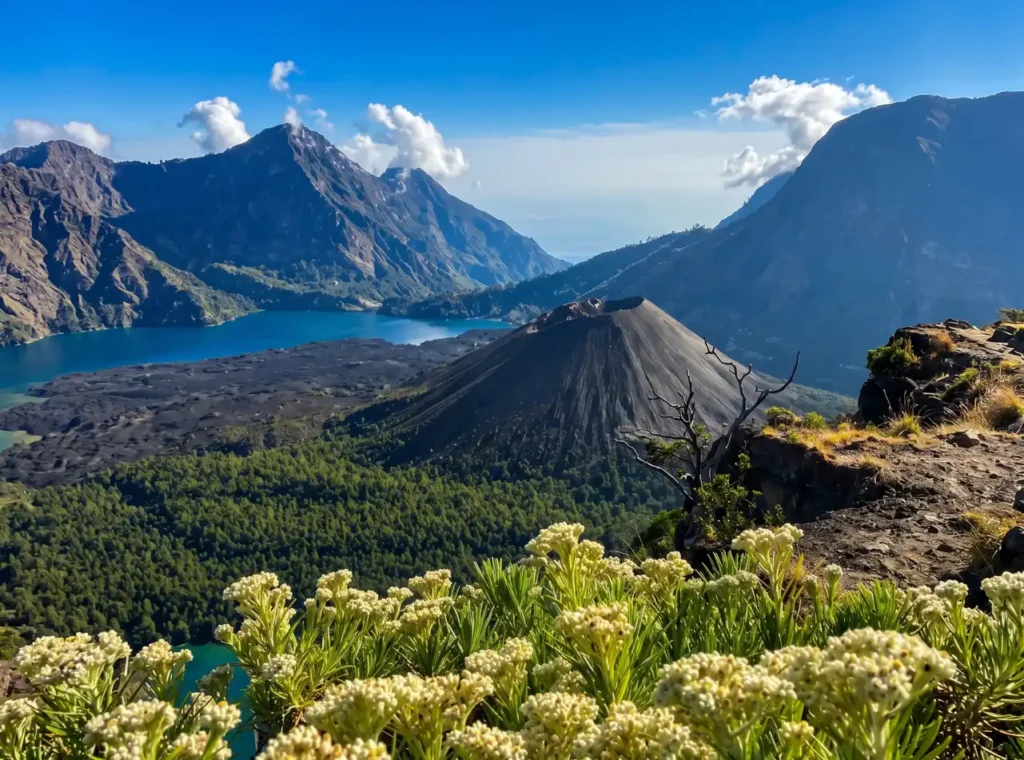
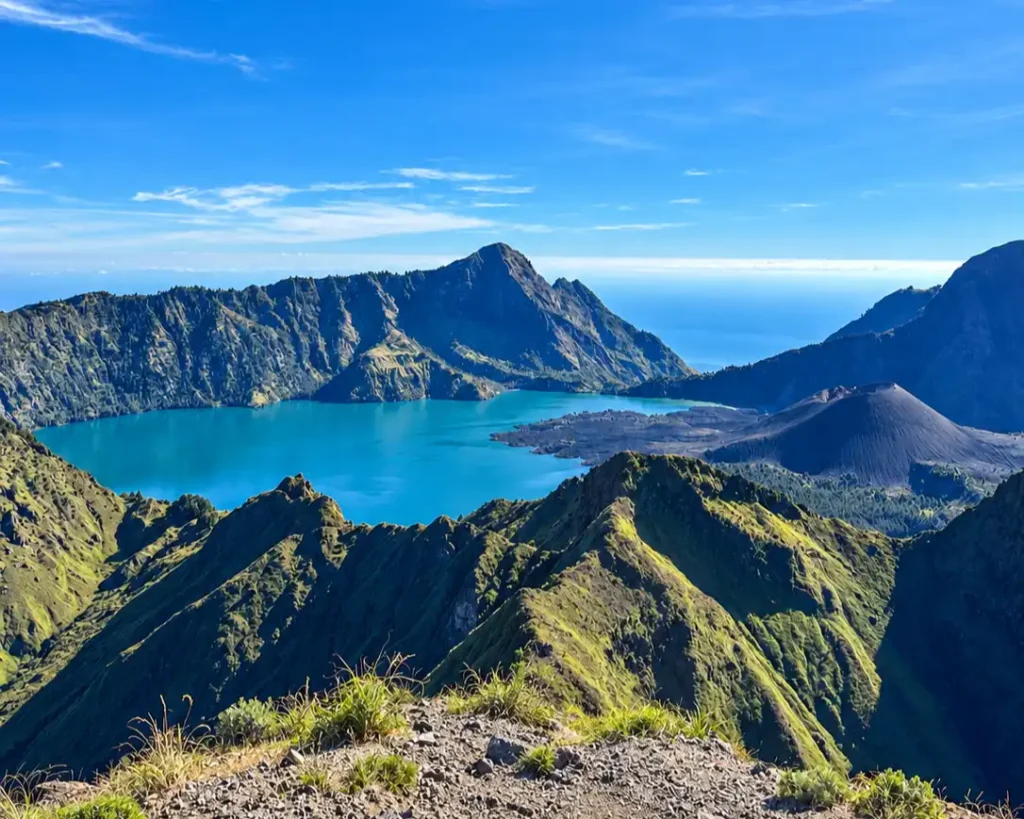
Mount Rinjani rises to 3,726 metres on the Indonesian island of Lombok. It is the island’s defining landmark, the centrepiece of Gunung Rinjani National Park and Indonesia’s second-highest volcano. Yet its height is only part of the story. A vast caldera, the blue waters of Segara Anak and the active volcanic cone of Barujari make the Rinjani landscape far more complex than a single summit.
For travellers, Mount Rinjani offers a demanding multi-day adventure rather than a casual walk. A successful trip depends on choosing an itinerary that matches your fitness, preparing for large changes in elevation and temperature, and following the national park’s current access rules.
This guide explains what makes Rinjani special, what the trek is really like and what to consider before you book.
Where Is Mount Rinjani?
Mount Rinjani is in northern Lombok, West Nusa Tenggara, Indonesia. The mountain and its surrounding forests, savannah and caldera form part of Gunung Rinjani National Park.
Most trekking trips are associated with gateway villages such as Sembalun and Senaru. Other official entrances serve different sides of the national park, but they do not all offer the same scenery or access to the summit. Your starting point therefore shapes the entire experience.
Lombok International Airport is the main arrival point for visitors flying to the island. Travellers also reach Lombok by boat from Bali or the Gili Islands. Because transfers to the mountain can take several hours, many itineraries include a night near the trailhead before trekking begins.
What Makes Mount Rinjani Unique?
Rinjani is an active volcanic system with several major landscape features in one area:
- the 3,726-metre summit;
- a broad caldera surrounded by steep ridges;
- Segara Anak, the lake inside the caldera;
- Barujari, an active cone within the caldera; and
- terrain that changes from tropical forest to open grassland and exposed volcanic slopes.
That variety is one reason the trek feels so different from an ordinary mountain ascent. Depending on the route, hikers may move through shaded forest, dry savannah, high crater rims and loose volcanic ground during the same trip.
Rinjani also has deep cultural and spiritual importance for communities in Lombok and Bali. Visitors should treat the mountain as a living cultural landscape, not simply an outdoor attraction.
What Is the Mount Rinjani Trek Really Like?
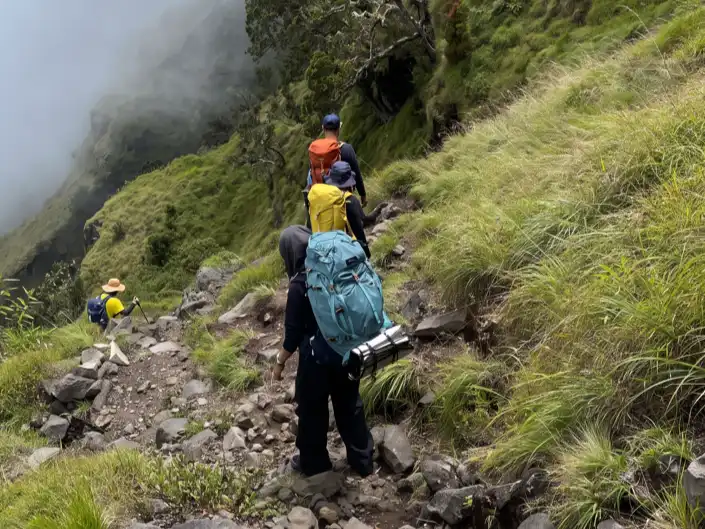
The standard Rinjani experience involves long days, sustained climbing, basic camps and changing weather. Even a short itinerary can include steep ascents and descents. Longer journeys may combine a crater rim, the summit area, Segara Anak and a traverse between different trailheads.
The summit attempt is usually the hardest section. It commonly begins before dawn and climbs over loose volcanic material. Progress can be slow because the surface shifts underfoot, the air is colder and thinner, and fatigue has already accumulated from the previous day.
Reaching a crater rim without attempting the summit can still be a rewarding objective. The right choice is not automatically the highest point; it is the itinerary that suits your experience, available time and physical condition.
How Many Days Do You Need?
Rinjani trips are commonly organised over two or three trekking days, although longer itineraries are possible.
Two-day treks
A two-day programme is the more compact option. Depending on the route and itinerary, it may focus on a crater rim or combine Sembalun with an early summit attempt. The schedule is concentrated, with less recovery time between the main climbs.
Travellers comparing shorter options can review the 2-day, 1-night Sembalun trek and the 2-day, 1-night Senaru trek.
Three-day treks
A three-day itinerary gives the journey more room. It can combine several of Rinjani’s major features and distribute the walking over a longer period, although it remains physically demanding. One example is the 3-day, 2-night Sembalun trek.
Do not choose by duration alone. Ask which trailheads, camps and objectives are included, how much elevation is gained each day, and whether the itinerary visits the summit, lake or crater rim.
When Is the Best Time to Hike Mount Rinjani?
Trail access is controlled by the national park and can change because of heavy rain, wildfire risk, volcanic activity, maintenance or emergency conditions. Seasonal closures are also used for safety and ecosystem recovery.
Dryer months are generally preferred because trails and camps are less affected by rain, but dry conditions can bring dust, heat and fire risk. Mountain weather remains changeable in any month. Strong sun during the day can be followed by cold, wind and low visibility at elevation.
Before committing to flights or a fixed itinerary, confirm the latest trail status through the Gunung Rinjani National Park authority, the eRinjani booking system and your trekking organiser. Never assume that information from an older blog or social-media post is still current.
How Difficult Is Mount Rinjani?
Mount Rinjani is a strenuous trek. The main challenges are cumulative rather than technical:
- long hours of uphill and downhill walking;
- substantial elevation change;
- loose, dusty or slippery ground;
- cold and wind at exposed camps and ridges;
- limited sleep during a summit itinerary; and
- consecutive days of physical effort.
Previous mountain experience is valuable, but good preparation matters just as much. In the weeks before your trip, build an aerobic base and practise sustained climbing. Stair sessions, hill walks and hikes with a light pack are more useful than relying on short, flat workouts alone. Strengthening your legs and core can also make the long descents more manageable.
If you have a medical condition, recent injury or uncertainty about exercising at altitude, seek appropriate medical advice before booking.
What Should You Pack for Mount Rinjani?
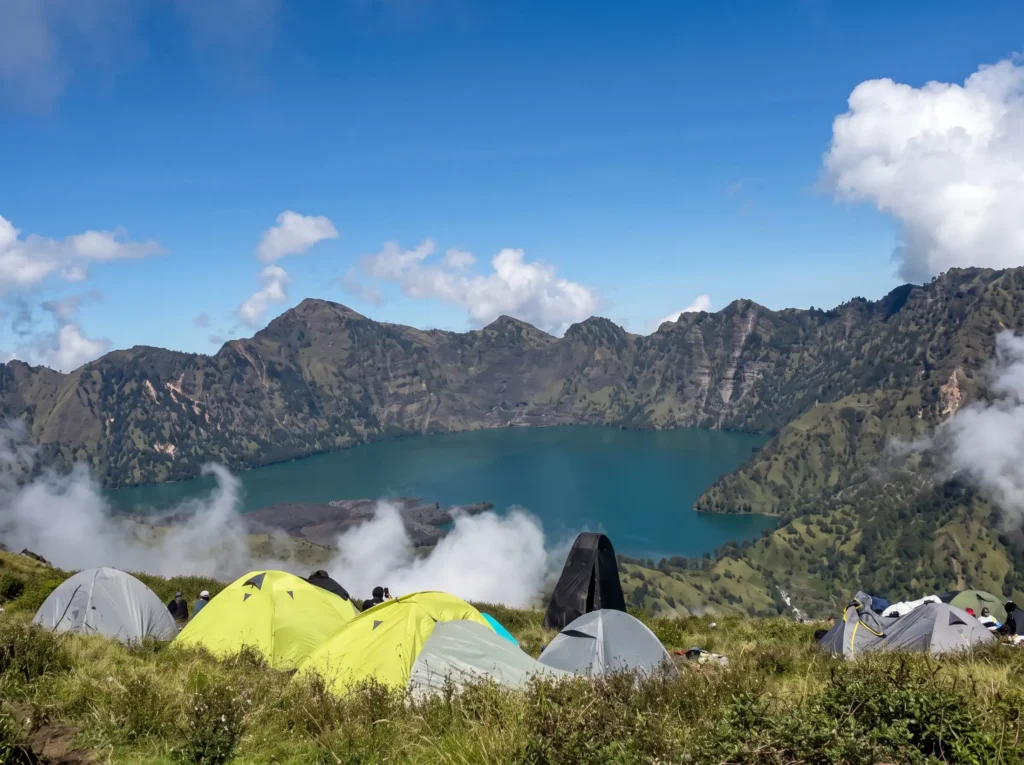
Your organiser should clarify which camping equipment and supplies are included. You will still need personal clothing and equipment suited to heat, cold, sun, dust and rain.
A practical personal packing list includes:
- broken-in hiking shoes with reliable grip;
- a small daypack;
- a warm insulating layer;
- a waterproof or wind-resistant outer layer;
- quick-drying hiking clothes;
- a hat, sunglasses and sunscreen;
- a head torch with spare power;
- reusable water bottles;
- personal medication and basic toiletries; and
- trekking poles if you are comfortable using them.
Avoid carrying unnecessary weight, but do not remove essential cold-weather or rain protection simply to make your pack lighter. Ask in advance about sleeping bags, tents, drinking water, meals and porter arrangements so you know exactly what you must supply yourself.
Permits, Guides and Booking Rules
Rinjani is a protected national park, so entry is regulated. Registration, visitor quotas, fees, insurance requirements and permitted trails may change. International visitors should arrange their trek through an authorised local trekking service and follow the current eRinjani process.
Official rules also require hikers to remain on approved trails and comply with guide and ranger instructions. A legitimate operator should be able to explain the booking process, identify what is included and provide a clear itinerary before payment.
When comparing operators, ask for specifics:
- Which official route and trailhead will be used?
- Is national park registration included?
- How many guests will share one guide?
- What food, water, tents and sleeping equipment are provided?
- How is waste carried out?
- What happens if the park closes or weather affects the itinerary?
- What level of accident or evacuation cover is included?
Clear answers are more meaningful than vague promises of a “luxury” or “easy” trek.
Safety on an Active Volcano
Rinjani’s terrain and volcanic setting deserve respect. Follow official announcements and never enter a closed area. Weather, fire, rockfall, slippery ground and poor visibility can all change the risk level quickly.
During the trek:
- tell your guide immediately if you feel unwell;
- keep a steady pace instead of racing early in the day;
- drink and eat regularly;
- stay with the group;
- use extra care on exposed, loose or narrow sections; and
- be prepared to turn back if conditions or your health deteriorate.
Reaching the planned objective is never more important than returning safely. Helicopter or ground evacuation may be delayed by cloud, terrain and weather, so prevention and conservative decisions matter.
Responsible Trekking on Rinjani
Every visitor contributes to the condition of the mountain. Carry reusable containers, avoid single-use packaging where possible and make sure all waste leaves the trail. Do not discard tissues, food scraps or cigarette ends, even if they seem biodegradable.
Use designated toilets or follow your guide’s waste procedure. Keep noise low, do not feed wildlife, respect cultural practices and leave rocks, plants and other natural features where they are. Choosing an operator with a clear waste-management process helps turn these principles into practical action.
Is Mount Rinjani Right for You?
Rinjani may suit you if you enjoy challenging multi-day walks, are willing to sleep in simple mountain camps and can train before travelling. It also rewards visitors whose priority is the broader volcanic landscape rather than a summit certificate alone.
Consider a crater-rim itinerary instead of a summit attempt if you have limited mountain experience, less time or no interest in the pre-dawn summit climb. If you want a gentler introduction to the island’s landscapes, Lombok also has village walks, coastal hills and waterfall trails outside the national park.
Frequently Asked Questions
How high is Mount Rinjani?
Mount Rinjani reaches 3,726 metres above sea level.
Is Mount Rinjani an active volcano?
Yes. Rinjani is an active volcanic system, and Barujari is an active cone within the caldera. Visitors must follow current official restrictions and stay on open routes.
Can beginners climb Mount Rinjani?
Fit beginners can complete some organised itineraries, but Rinjani should not be treated as an easy first hike. Training, realistic route selection and a qualified guide are essential. A crater-rim trek may be more appropriate than a summit programme for some first-time trekkers.
Can you hike Mount Rinjani without a guide?
Visitors must follow current national park rules, and international trekkers are expected to use an authorised trekking service. Independent access should never be assumed. Check the current requirements before travelling.
Is the summit the only worthwhile objective?
No. The crater rims, Segara Anak, forests, savannah and volcanic views are major parts of the experience. A non-summit itinerary can still deliver a memorable Rinjani trek.
Plan a Rinjani Trek That Fits You
The best Mount Rinjani trip is not the one with the most ambitious label. It is the one that matches your fitness, gives you enough time and follows the mountain’s current conditions.
Compare Rinjani Trip’s Sembalun and Senaru trekking programmes or contact the team with your travel dates, previous hiking experience and preferred objective. They can help you identify a suitable itinerary while confirming current park access before you book.